Best small van for camper conversion

There isn’t just one best small van for camper conversion. For most UK buyers, the main options are the VW Transporter, Ford Transit Custom, Renault Trafic, and the Toyota Proace, Vauxhall Vivaro, or Peugeot Expert family. The right choice depends less on the badge and more on how you plan to use it, whether for daily driving, weekend trips, longer touring, a self-build project, or something you might want to resell later.
A small van can make an excellent camper if you want something easier to park, cheaper to run than a larger van, and more realistic to live with year-round. The compromise is space. You get less interior width, less standing room, tighter storage, and more pressure on the layout, so everyday practicality matters more than it does with a bigger camper.
What counts as a small van for camper conversion?
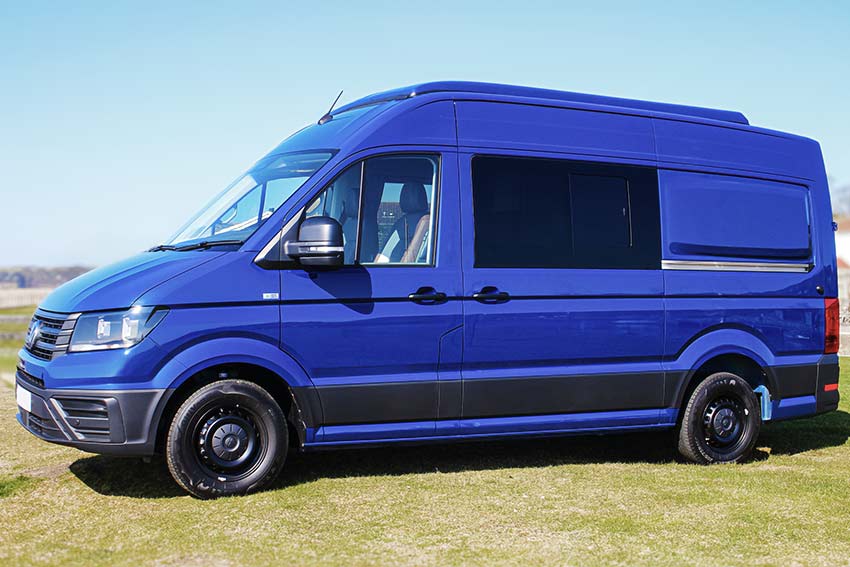
In this guide, a small van means a mid-size van that is still practical for daily driving and parking, not a larger panel van such as the Fiat Ducato, Mercedes Sprinter, or VW Crafter. For most UK buyers, that usually means the Transporter, Transit Custom, Trafic, or one of the shared-platform alternatives such as the Proace, Vivaro, or Expert.
That distinction matters because people usually choose a smaller van to keep one foot in normal life between trips. The appeal is not just camping comfort. It is being able to use the van during the week without every journey feeling like a compromise. That is why the best small van is usually the one that balances camper use with the realities of parking, servicing, insurance, and day-to-day driving.
Quick comparison of the main options
| VW Transporter | Buyers who want strong aftermarket support and a broad conversion choice | Easy to live with for a van of this size | Good, but still compact | Usually very strong because parts, layouts, and roof options are widely available | Often expensive to buy; resale can be stronger if the condition and spec are right |
| Ford Transit Custom | Buyers who want a mainstream all-rounder | Strong road manners and practical size | Good balance of cabin comfort and usable conversion space | Usually good, with plenty of converter familiarity | Can offer better value than a like-for-like VW, but depends heavily on age and spec |
| Renault Trafic | Buyers are watching the upfront cost | Generally easy enough to use day to day | Decent for short breaks and simple layouts | Often workable, though layout compromises vary by model and roof choice | Purchase price can be friendlier; check the condition carefully, rather than assuming a bargain |
| Toyota Proace / Vauxhall Vivaro / Peugeot Expert family | Buyers open to shared-platform alternatives | Often easy to place on the road and in town | Sensible rather than roomy | Can be a practical base, but conversion support may feel less lifestyle-led than VW or Ford | Can sit in a useful middle ground on price, but resale strength varies |
The VW Transporter usually appeals to buyers who want strong aftermarket support, lots of conversion choice, and resale confidence. The Ford Transit Custom is often the mainstream all-rounder, combining good road manners with a practical footprint and solid conversion potential.
The Renault Trafic often attracts buyers who are more price-sensitive at the start. The Toyota Proace, Vauxhall Vivaro, and Peugeot Expert family sit in a useful middle ground for buyers who care more about condition and sensible value than about following the most obvious campervan crowd.
Taken side by side, the best choice is usually the van that gives you enough room for your preferred layout without becoming a nuisance to park, insure, service, or live with for the rest of the year.
Which van is most likely to suit you?

If support, conversion options, and resale value matter most, the VW Transporter remains a strong pick. It is popular for good reason, although that does not automatically make it the best value for every buyer.
If you want an easy-driving all-rounder with a good balance of practicality and cost, the Ford Transit Custom is often the one to look at first. If budget matters more and you can accept a simpler route, the Renault Trafic can make a practical entry point into camper ownership.
If you are open-minded and mainly care about buying a sensible van in good condition, the Toyota Proace, Vauxhall Vivaro, or Peugeot Expert family are worth serious consideration. They may feel less lifestyle-led than the VW or Ford options, but that does not stop them from being workable camper bases.
Comparing the van options in real life

A van can feel perfect when you are parked up for the weekend, then slightly awkward for the rest of the time. That tends to show up in everyday moments: a tight car park, a height barrier, or the point where a normal weekly drive suddenly feels more cumbersome than expected.
It works the other way, too. Some vans feel easy enough in daily life, then become tighter than expected once insulation, furniture, water, electrics, and a bed go in. Space that looked generous in an empty shell can shrink quickly once the conversion becomes real.
That is why the best small van usually comes down to honest use rather than idealised use. Will it mostly be driven during the week? Does it need to fit normal parking spaces? Will a pop-top suit the way you actually live, or do you need the extra room of a fixed high-top badly enough to accept the trade-off?
What makes a small van a good camper base?
A good small camper base is not just about the badge on the grille. Width matters because it affects whether the bed layout feels workable or slightly compromised. Roof options matter because they change standing room, storage, and how easy the van is to live with outside camping trips.
Then there is the less glamorous side of ownership: parts availability, familiarity among converters, and how easy it is to fix or improve things later. And the basics still decide the deal. Service history, rust, mechanical condition, and evidence of careful ownership matter more than the brand story attached to the van.
Pros and cons of the main options
The biggest advantage of a small van is that it can still work as a regular vehicle. It is easier to store, easier to drive in mixed situations, and less intimidating than a larger camper. That is often the whole point.
The downside is that every design decision costs you something. A wider bed may mean less storage. A kitchen may reduce movement inside the van. A high-top may improve camping comfort while making daily use less convenient. The VW Transporter tends to score well on support and resale, but can be expensive to buy. The Ford Transit Custom usually gives a strong balance of value and practicality. The Renault Trafic can look attractive on price, but the condition needs careful checking. The Proace, Vivaro, and Expert vans can be sensible choices, although they are often judged more on the specific van than on any campervan reputation.
What to check before buying a base van
Before buying, focus on the van itself rather than getting distracted by paint, wheels, or bolt-on extras. Service history, rust, accident repairs, mileage consistency, tyre wear, brakes, warning lights, and signs of leaks all matter more than how tidy the advert looks.
Then make sure the shell can support the layout you want. Measure the bed length and width properly. Allow for the space lost to insulation. Decide whether a pop-top or a high-top really suits how you will use it. If you are buying a converted van, look closely at the workmanship. Open cupboards, check fittings, inspect wiring routes, and see whether the layout actually feels solid in person.
Paperwork matters too. Added seats, gas systems, electrical installations, and other fitted equipment should have a credible basis. Good listings usually show that care has gone into the van. Vague listings, missing details, or recycled photos are harder to trust, even before you go to view them.